Dwaeji gukbap (돼지국밥) is Busan’s pork rice soup: a rich pork broth with sliced pork and rice, often served bubbling in an earthenware pot called a ttukbaegi. It’s my go-to when I want a quick, filling meal. At the restaurant in these photos, my bowl came with rice on the side, thin wheat noodles and a fried egg among the side dishes.
Prefer it mild? Some shops add dadegi (spicy seasoning paste) before serving. When you order, say 다대기 빼 주세요. (Please leave out the spicy paste.)
How I eat dwaeji gukbap in 5 steps
- Let the soup cool for a moment if it arrives bubbling in the ttukbaegi.
- Taste the broth first. If it needs salt, add a little saeujeot (salted shrimp) and taste again.
- Add buchu (seasoned chives) to taste and a little dadegi if you want some heat.
- If somyeon (thin wheat noodles) come on the side, eat them before they soften in the broth.
- If the rice comes separately, add it a spoonful at a time or tip in the whole bowl. Try a bite with radish kimchi.
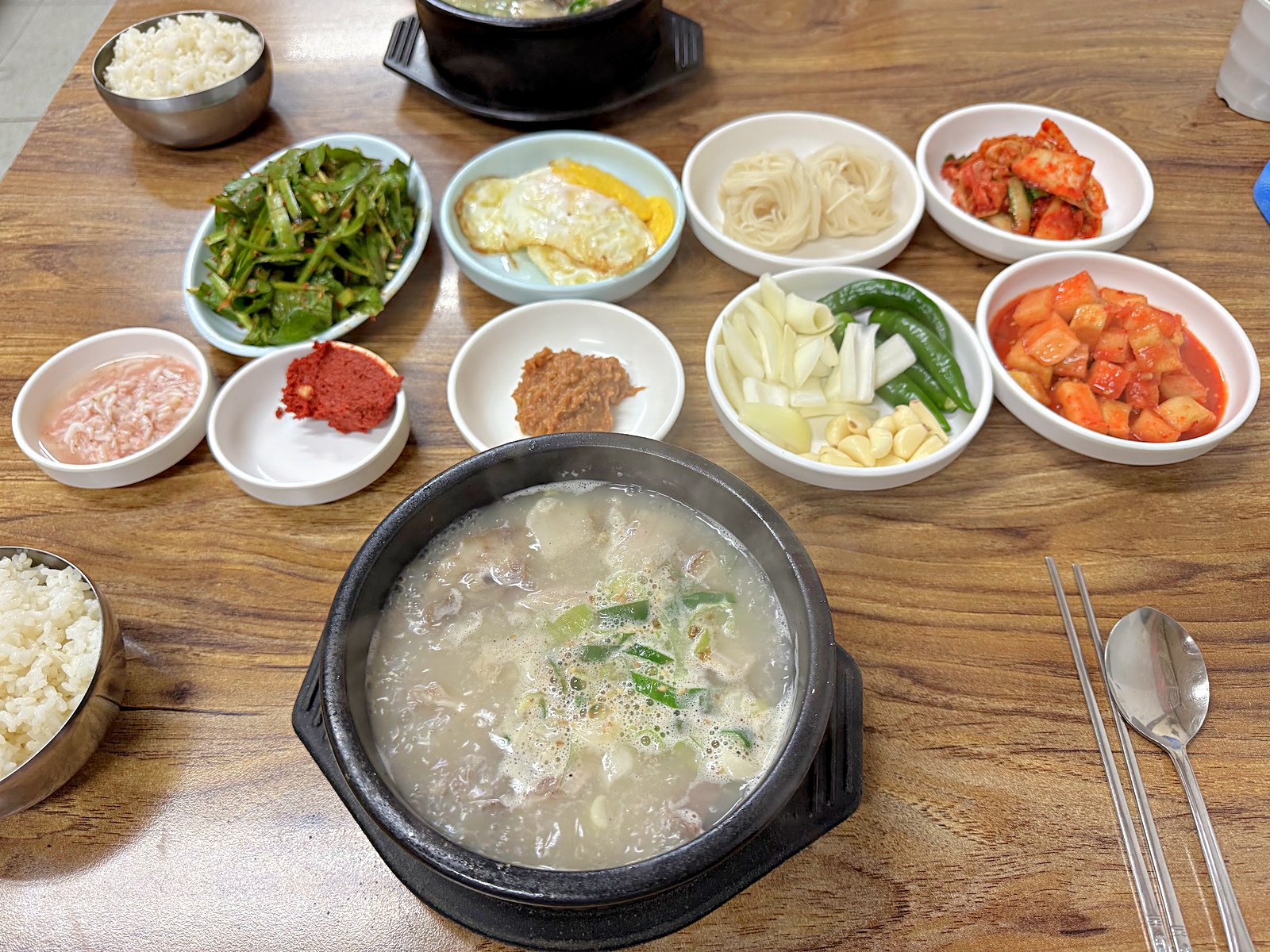
My gukbap table: soup, rice, thin noodles, a fried egg and side dishes. Photo: Jin from Korea
What Is Dwaeji Gukbap?
Dwaeji means pork, guk means soup and bap means rice. The broth is made by simmering pork bones and meat for hours, which turns it cloudy white and rich. Slices of boiled pork go in, and you eat it with rice. Koreans see it as fast, filling, honest food: it comes out quickly because the broth is cooked ahead in big pots.
One story links the soup to Korean War refugees who settled in Busan and cooked with the pork available to them. It became one of Busan’s signature dishes and you can now order it across Korea. I photographed the bowls and menu in this guide at a gukbap restaurant.
Is Dwaeji Gukbap Spicy?
The plain pork broth is mild. If the restaurant serves the dadegi separately, you can add a little to taste. If you want to try the plain broth first, ask when ordering for the paste on the side.
What the broth tastes like
Rich, savory and porky, a bit like a lighter, less salty version of tonkotsu ramen broth. The salted shrimp, chives and kimchi add salt, freshness and crunch.
What Comes on the Table (and What Each Dish Is For)
The side dishes vary by shop. You can usually ask for more kimchi, chives or raw onion. See my Korean banchan guide for how refills work.
- Saeujeot (새우젓) — tiny salted shrimp. Use a little to season the broth or as a dip for the pork.
- Dadegi (다대기) — a spicy paste of red pepper powder, garlic and seasonings. It turns the white broth red and gives it a kick.
- Buchu muchim (부추무침) — garlic chives tossed in red pepper and sesame. I like adding a pinch to the soup.
- Somyeon (소면) — a small nest of thin wheat noodles, served on the side at the restaurant in the photos.
- Raw onion, garlic and green chili — dip them in the brown paste (ssamjang or doenjang) and eat them between spoonfuls.
- Kimchi and kkakdugi (깍두기) — cabbage kimchi and cubed radish kimchi. Gukbap without kkakdugi feels incomplete to many Koreans.
Why Koreans Call Boiling Soup “Siwonhada”
Your gukbap usually arrives in a ttukbaegi (뚝배기), a heavy earthenware pot, and it is often still boiling and bubbling when it lands on the table. Be careful: the pot stays very hot for a long time, so do not touch it, and blow on each spoonful.

Straight from the kitchen, still bubbling in the ttukbaegi. Photo: Jin from Korea
After the first spoonful, many Koreans sigh and say “아, 시원하다” (a, siwonhada). Siwonhada literally means “cool” or “refreshing”, which sounds strange for boiling soup. In this case it means a deep, satisfying feeling, as if the hot broth clears your body and your head. You will hear it about hot soups, about a good sauna and even about the morning after a night of soju. If you say it after your first sip, your Korean friends will laugh and approve.
How to Eat Dwaeji Gukbap Like a Local, Step by Step
This is how I eat it when the rice and noodles come on the side. Adjust the seasoning and the order to suit your taste.
1. Taste the broth before seasoning
If the broth needs more salt, stir in a little saeujeot (salted shrimp) and taste again. A small amount goes a long way.
2. Add chives and dadegi to taste
I like adding a pinch of buchu muchim. The chives soften in the hot broth and add a fresh, garlicky taste. If dadegi came on the side and you want some heat, start with a small amount.
3. Eat the noodles first if they come on the side
Drop the somyeon into the soup and eat them while they’re still springy. They soften and soak up the broth if you leave them in too long.
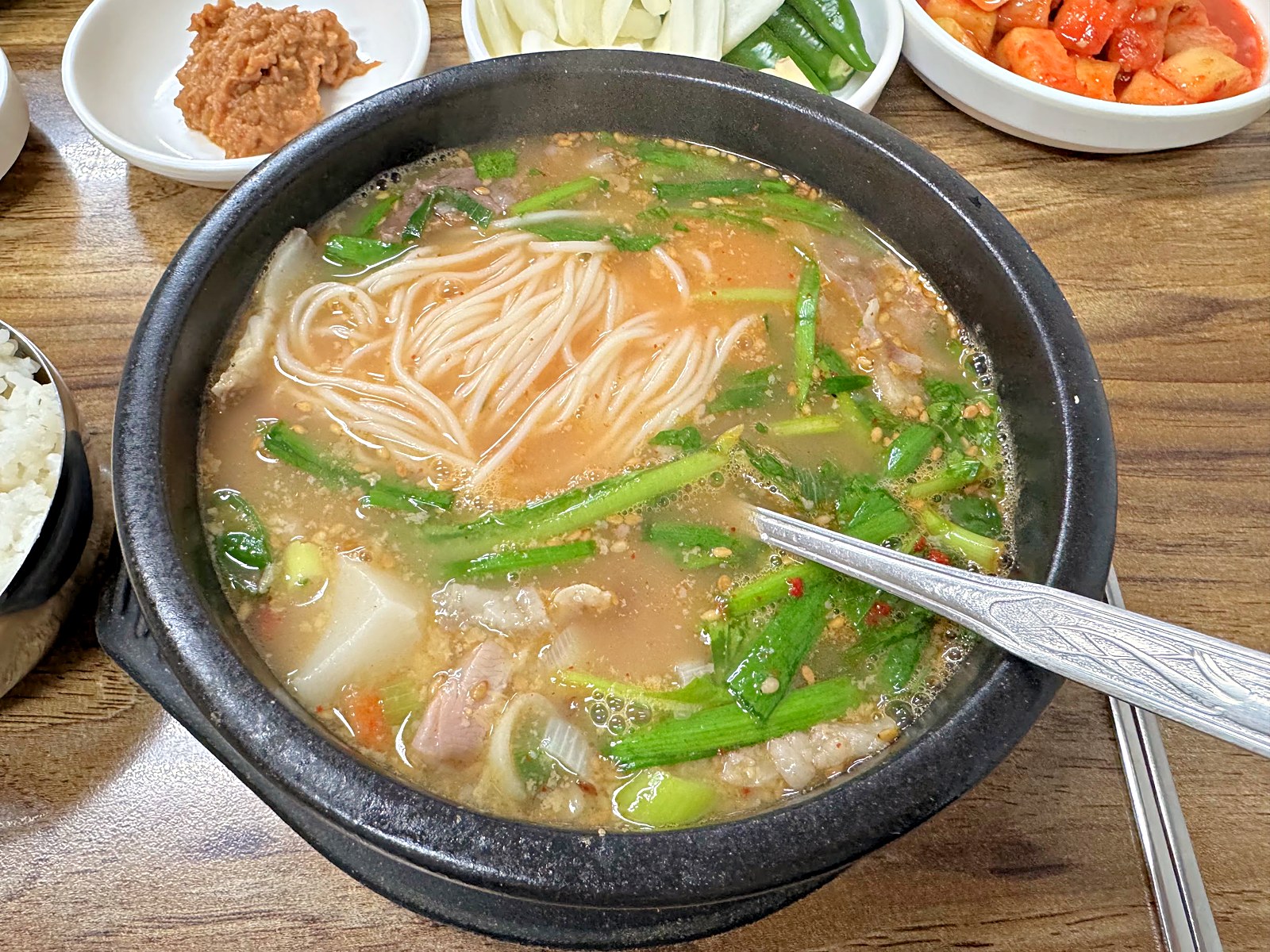
My bowl after adding dadegi, chives and noodles. Photo: Jin from Korea
4. Add the rice your way
With ttaro gukbap (따로국밥), the rice comes in a separate bowl. Add it a spoonful at a time or tip the whole bowl in. Some restaurants serve the rice already in the broth (말아서, maraseo). I like finishing the last spoonfuls with a piece of kkakdugi on top.
5. Eat the pork with the dips
Pick up a slice of pork with your chopsticks, dip it in a little salted shrimp, and eat it with a piece of raw onion or garlic. Koreans eat the meat with chopsticks and the broth and rice with the spoon.
Dwaeji Gukbap vs Naejang and Sundae Gukbap: Which to Order
Choose by what you want in the bowl. The menu name tells you which ingredient to look for.
| Menu | Ingredients and texture |
|---|---|
| Dwaeji gukbap 돼지국밥 |
Mostly sliced pork. The texture depends on the cut. |
| Sundae gukbap 순대국밥 |
Includes sliced sundae, a Korean blood sausage with a soft filling. |
| Naejang gukbap 내장국밥 |
Mostly pork offal, with some pieces chewier than others. |
- Seokkeo gukbap (섞어국밥) is the mixed bowl. Ask what’s included, since the mix varies by shop.
- Lean meat only: some places offer salkogi gukbap (살코기국밥), with lean meat.
If you love Korean street snacks, you may already know sundae from my bunsik guide. In gukbap it is sliced and simmered in the broth.
How Much Does Dwaeji Gukbap Cost?
At the restaurant in the photo below, the wall menu listed a bowl of dwaeji gukbap for ₩7,000. Check the price next to 돼지국밥 on the menu where you order.

The gukbap menu board (차림표) I photographed. Photo: Jin from Korea
Useful words on the board: 국밥 (gukbap), 수육 (suyuk, boiled pork slices to share, often in small/medium/large), 수육백반 (suyuk baekban, a set with boiled pork, soup and rice) and 포장 (pojang, takeout). Soju and beer are usually on the menu too.
What a Gukbap Restaurant Is Like
Gukbap places are simple and busy. Many open early in the morning and some stay open late, though hours differ by shop, and they are often full at lunchtime with office workers. You order at the table or at a kiosk, eat quickly, and pay at the counter when you leave. Older restaurants often have a raised floor area where you take off your shoes and sit on the floor.

Floor seating at a gukbap restaurant: shoes off before you step up. Photo: Jin from Korea
Water is self-service from a dispenser or a jug on the table, and spoons and chopsticks are often in a drawer under the table. Eating alone is completely normal at gukbap restaurants, so this is a great meal for solo travelers.
Where to Eat Dwaeji Gukbap in Busan
Open a Naver Map search for 돼지국밥 to find a bowl near you or plan a stop in Busan.
Allow location access so Naver Map shows results around you.
Three neighborhoods to start with:
- Seomyeon: VisitKorea points to Seomyeon Local Food Street, the alley next to Seomyeon Market near Seomyeon Station, with many gukbap restaurants side by side. It is easy to reach on Lines 1 and 2; see my Busan subway guide.
- Haeundae: Look for the gukbap alley near the beach. It’s an easy stop after a walk along the sand. See my Haeundae Beach guide for the area.
- Nampo-dong: Look around the old downtown if you’re visiting Gukje Market or Bupyeong Kkangtong Market.
To ride the subway, tap a T-money card. For where to buy one, see my T-money card guide. To find restaurants, Naver Map works much better than Google Maps in Korea; here is why in my Google Maps vs Naver Map vs KakaoMap comparison.
Finding gukbap outside Busan
You can find dwaeji gukbap across Korea. In another city, search for 돼지국밥 on Naver Map to find nearby shops.
Gukbap for breakfast
Gukbap is also a breakfast option. Many restaurants open early. Check the opening time on Naver Map before heading out.
Ordering a bowl and asking for refills
Show these on your phone or read them out.
Words
- 돼지국밥 (dwaeji gukbap) — pork rice soup
- 순대국밥 (sundae gukbap) — soup with blood sausage
- 따로국밥 (ttaro gukbap) — rice served separately
- 다대기 (dadegi) — spicy seasoning paste
- 새우젓 (saeujeot) — salted shrimp
- 부추 (buchu) — garlic chives
Phrases
- 돼지국밥 하나 주세요. (dwaeji gukbap hana juseyo.) — One pork rice soup, please.
- 따로국밥으로 주세요. (ttaro gukbabeuro juseyo.) — Rice on the side, please.
- 다대기 빼 주세요. (dadegi ppae juseyo.) — Please leave out the spicy paste.
- 다대기 따로 주세요. (dadegi ttaro juseyo.) — Please serve the spicy paste on the side.
- 소면 더 주세요. (somyeon deo juseyo.) — More noodles, please.
- 부추 더 주세요. (buchu deo juseyo.) — More chives, please.
- 김치 더 주세요. (gimchi deo juseyo.) — More kimchi, please.
- 계산해 주세요. (gyesanhae juseyo.) — The bill, please.
Plan More Busan Food Stops
Build a short food walk around the neighborhood where you eat:
- Haeundae: Have gukbap after a beach walk, then stop for snacks at Haeundae Market.
- Nampo-dong: Start with gukbap, then browse the stalls on this Gukje Market and Bupyeong Kkangtong Market walk.
For another casual meal, see my Korean fried chicken guide.
If you’re still planning transport or where to stay, start with the Korea trip planner for first-timers.
Leave a Reply