On a road trip in Korea, the stop I look forward to most is not always the
destination. It is the highway rest stop, the
휴게소 (hyugeso). Last week I drove my own car from Busan up
toward Gyeongju, and on a bright autumn morning I pulled into Eonyang Rest
Area (언양휴게소) for a break, a stretch and, honestly, a
snack.
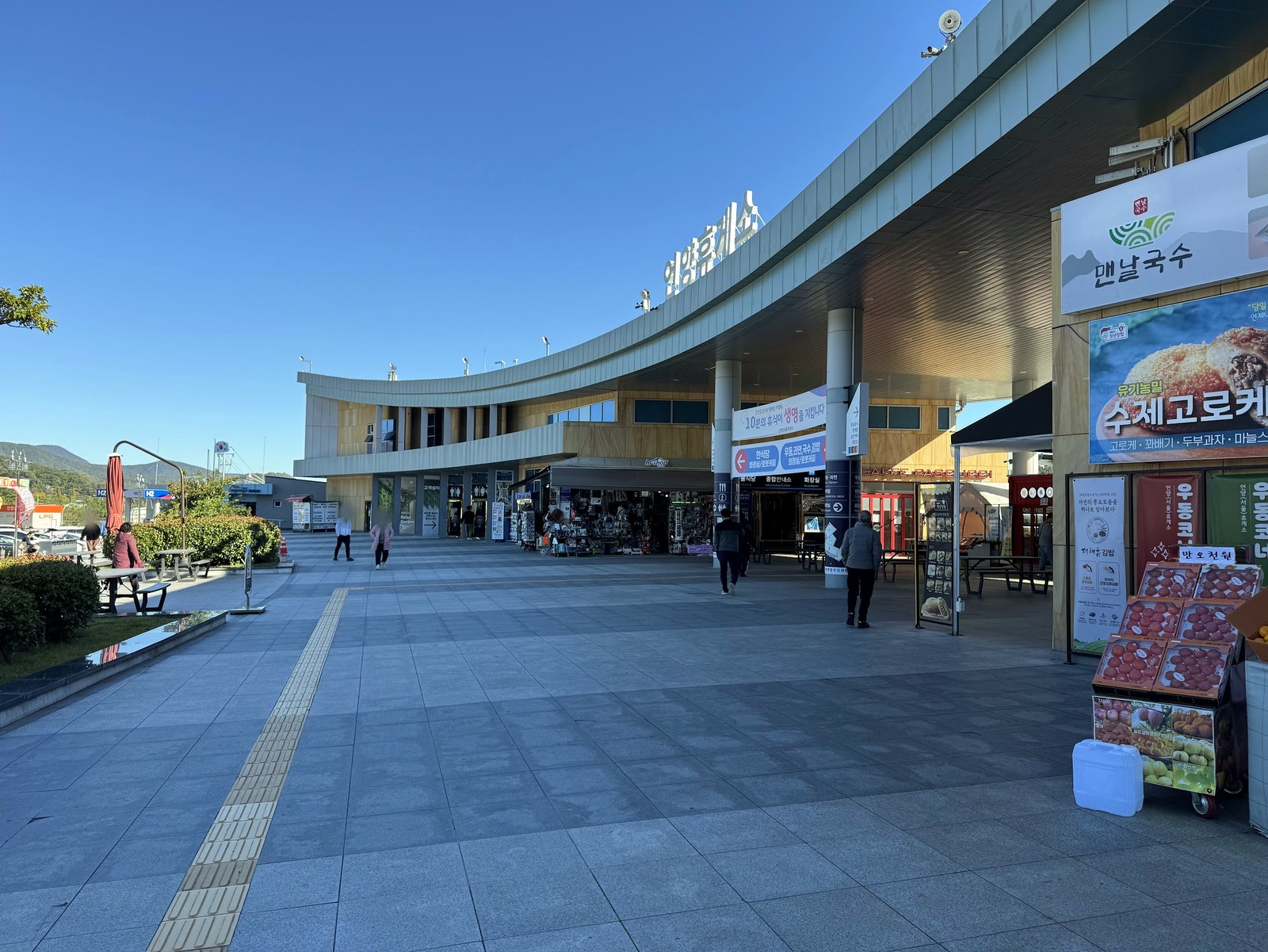
Eonyang Rest Area on a clear November morning. Photo: Jin from
Korea
What a Korean rest stop looks like
If you have only seen highway services in other countries, Korean rest stops
can be a surprise. They are less a gas station with a toilet and more a small
food hall. Inside Eonyang there was a food court with noodle and meal
counters, tables of people eating, and a convenience store. Outside, along the
front of the building, were the snack stalls, and that is where the crowd was.
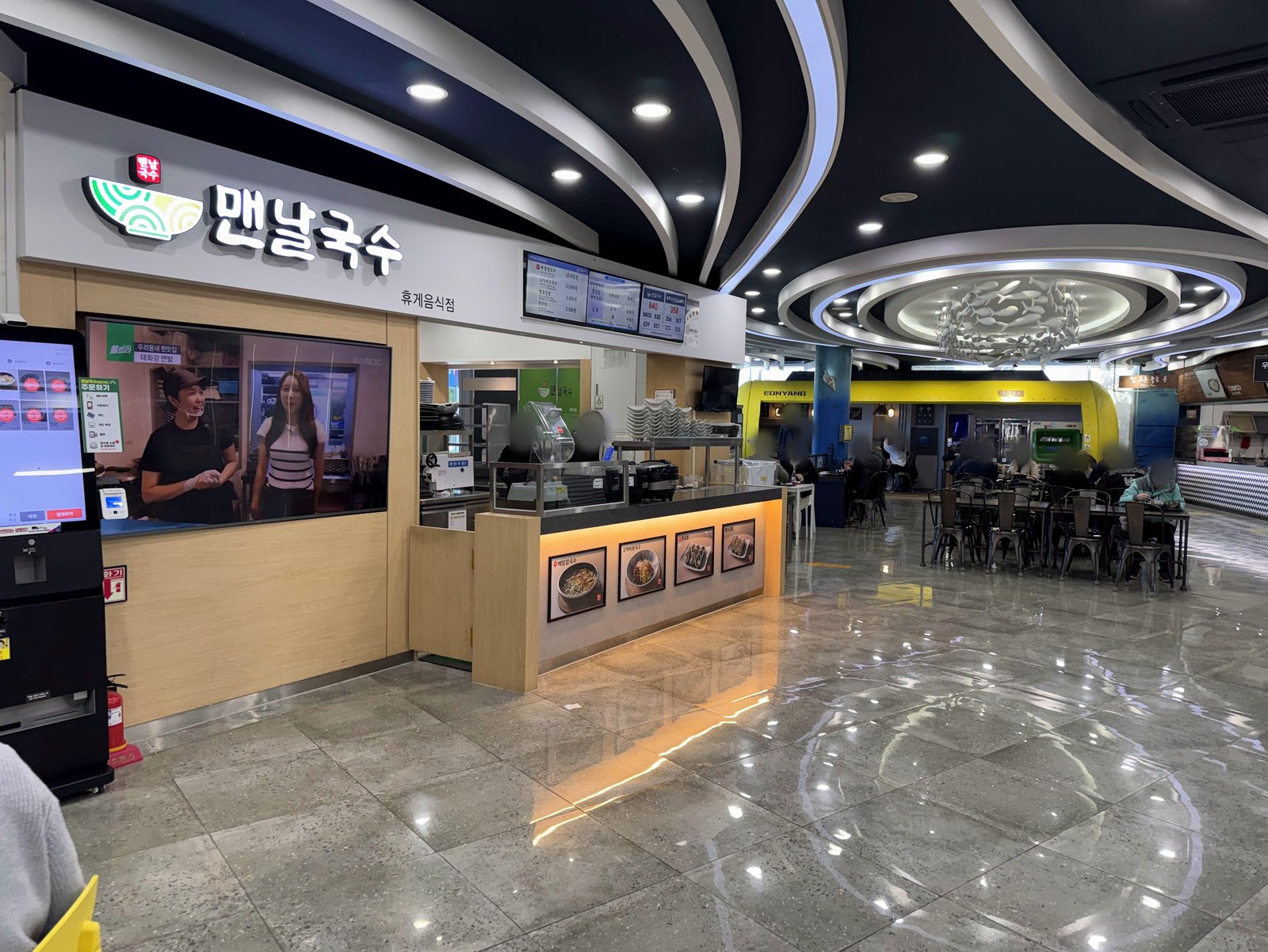
The food court inside, with a noodle counter and plenty of seating.
Photo: Jin from Korea
Even if you never drive in Korea, you may still end up at one. Long-distance
express buses (고속버스) often pull into a hyugeso for a
short break. If yours does, check when the bus is leaving again before you get
in line, and leave enough time for your order to be made. Hodugwaja and other
snacks are prepared after you pay, and a short rest-stop break can go quickly.
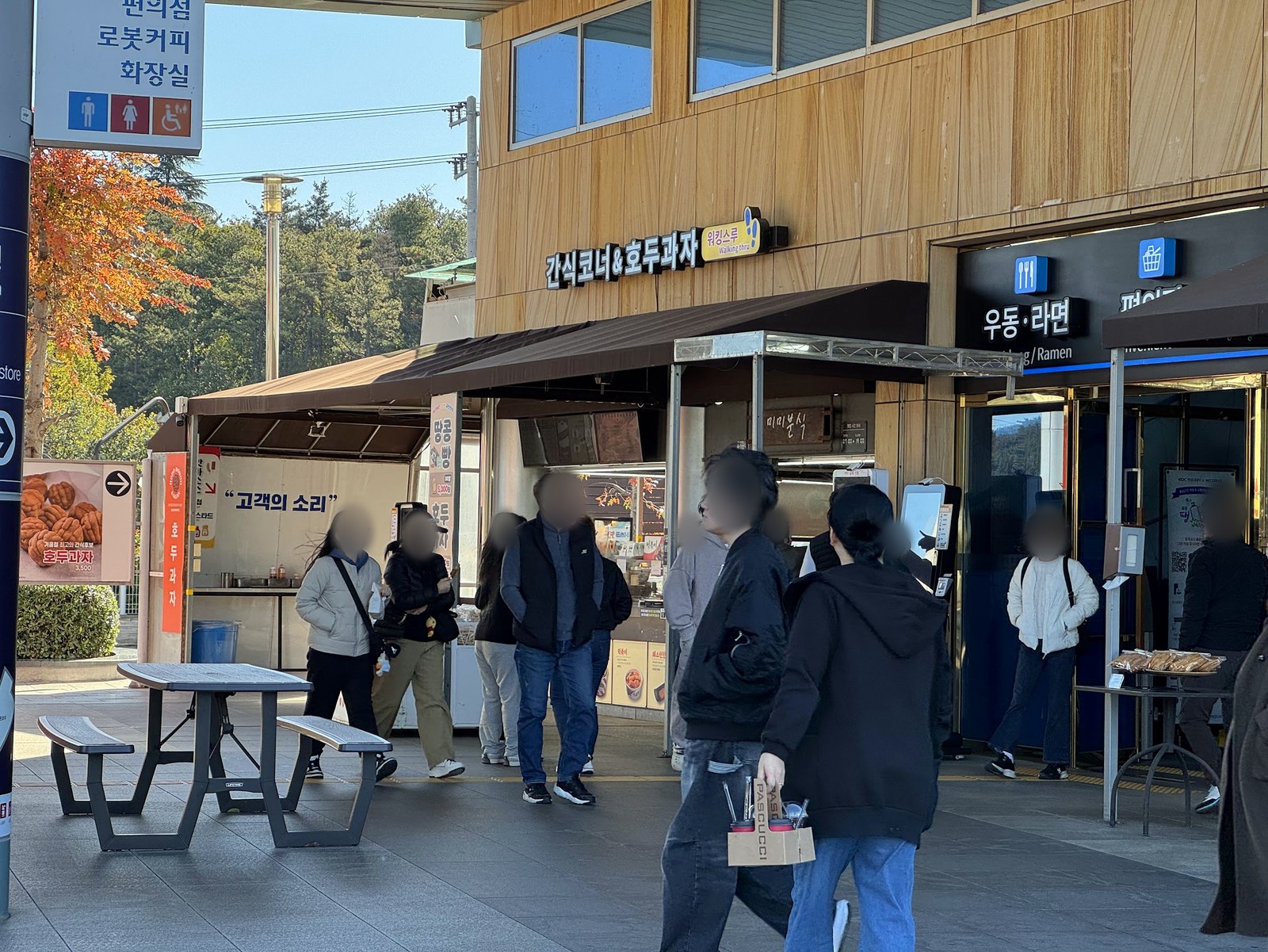
The snack corner and hodugwaja shop, busy even in the morning. Photo: Jin
from Korea
So many snacks, one choice
Rest-stop snacks are a whole category of Korean road-trip food. There were hot
bars (핫바, fish cake on a stick), grilled sausages, and
소떡소떡 (sotteok-sotteok), a skewer that alternates sausage
and rice cake, brushed with a sweet, spicy sauce. Next to them sat twisted hot
dogs, tteokbokki and grilled potatoes. Many of them are close cousins of the
bunsik snack food
you find on Korean streets, just made for eating in the car.
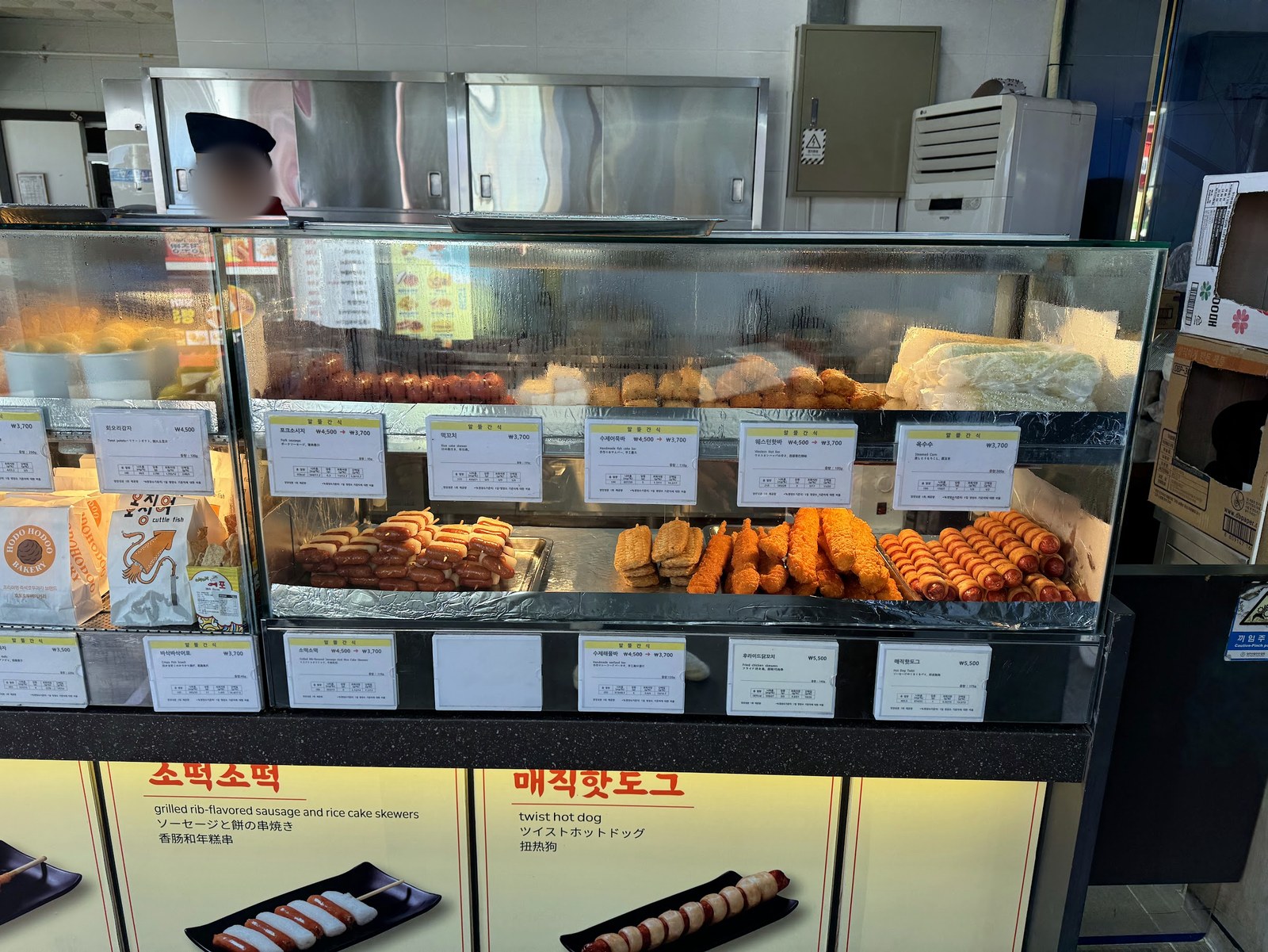
Skewers, sausages and hot dogs, with 소떡소떡 on the sign below. Photo:
Jin from Korea
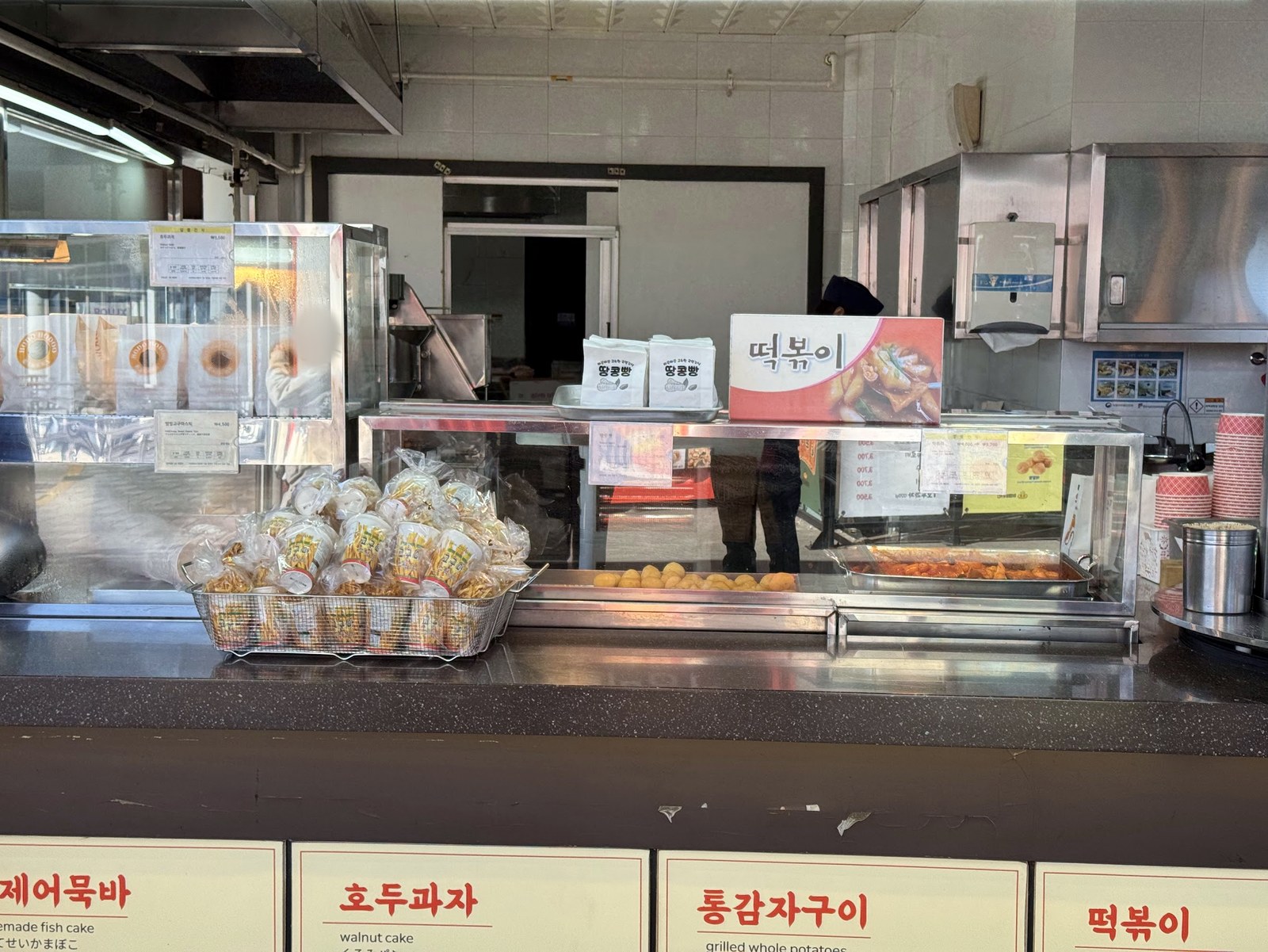
Tteokbokki, fish cake bars, grilled potatoes and hodugwaja at the next
counter. Photo: Jin from Korea
I could have gone for any of them, but I went with the classic:
호두과자 (hodugwaja), the little walnut-shaped cakes that
feel like the official snack of Korean highways. Even the sign outside agreed,
calling dried squid and hodugwaja the best snack picks for winter. It listed
hodugwaja at ₩3,500 and half-dried squid at ₩8,500.
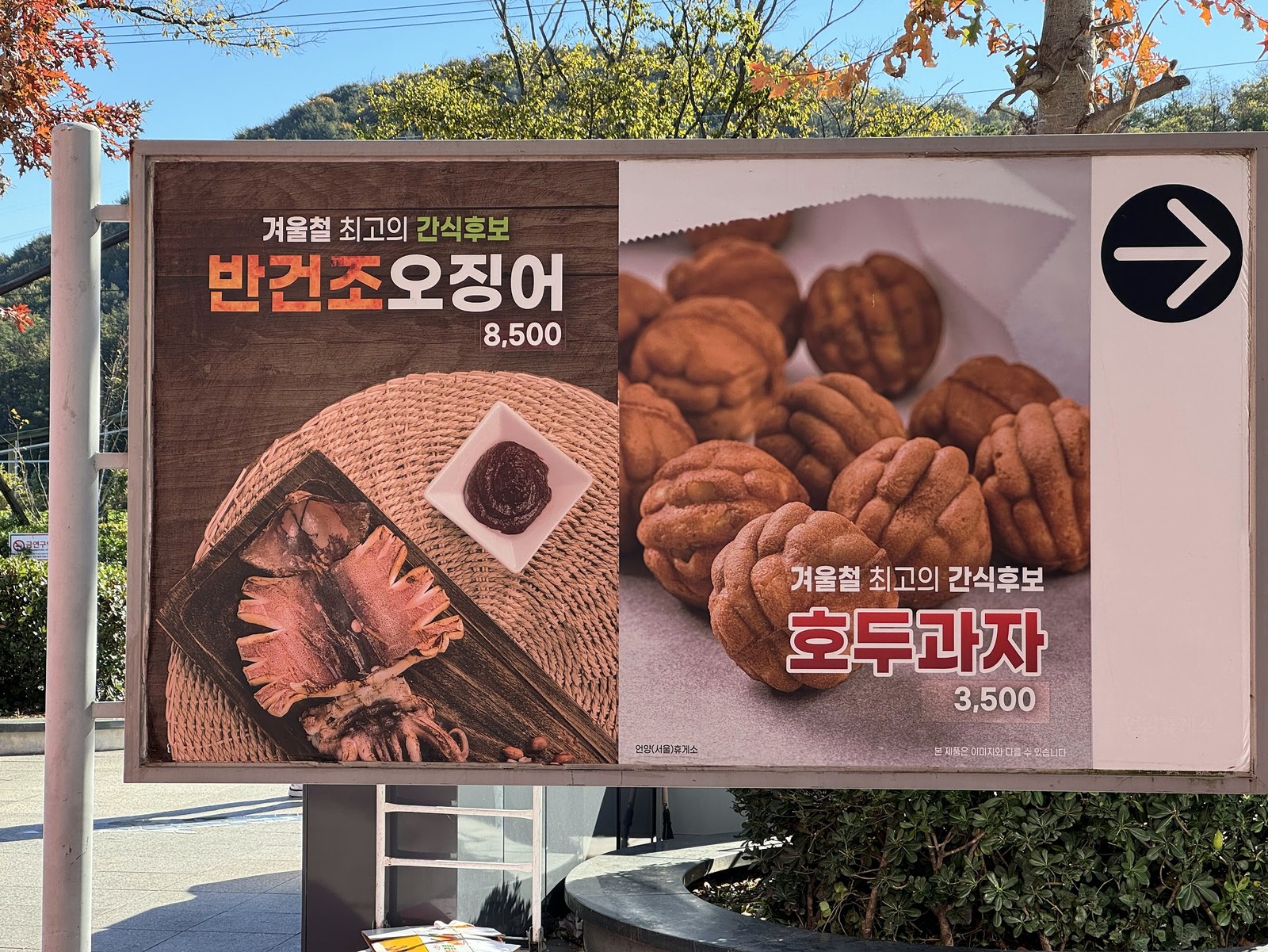
The sign out front: half-dried squid and hodugwaja, “the best snack picks
for winter.” Photo: Jin from Korea
The hodugwaja here comes from HODO HODOO BAKERY (호도호두베이커리), and the
bags call it a premium, freshly baked walnut cake brand. Through the
steamed-up window I could see the white paper bags lined up and ready to go.
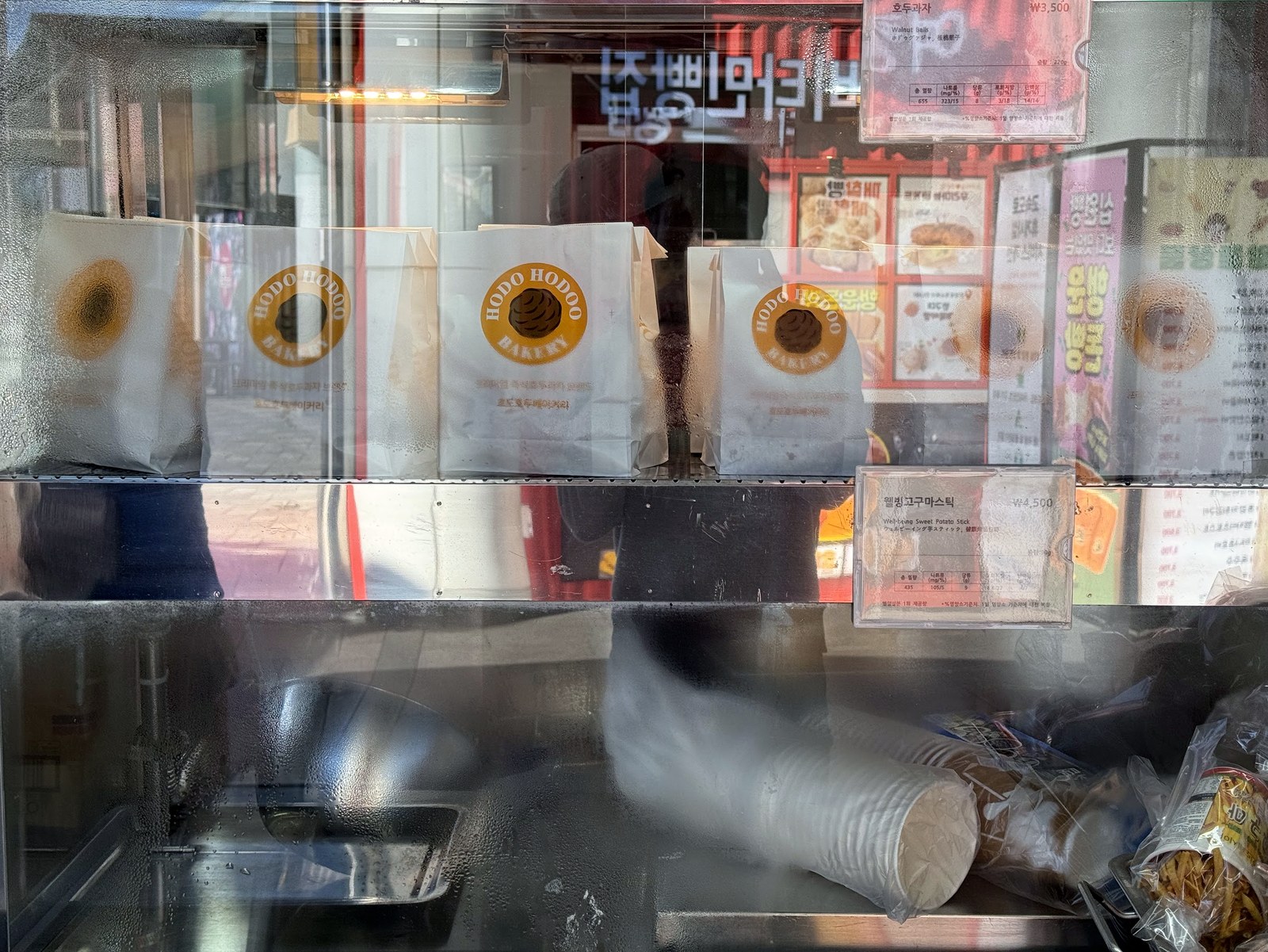
HODO HODOO bags waiting behind the warm, steamy glass. Photo: Jin from
Korea
How to order at the kiosk
At most Korean rest stops you don’t order at the counter anymore. You order at
a kiosk, pay there, and take your ticket to the stall. It sounds like more
work, but it is actually easier for visitors, because you never have to
explain what you want.
The screen was in Korean when I walked up. In the upper right corner of the
screen there is a small flag button, and tapping it lets you switch the
language. I speak Korean, so I just ordered in Korean. Even if you don’t read
a word of it, you can choose by the pictures: every item has a photo and a
price, and you just tap the one you want.
How to order is posted on a sticker beside the kiosk, under the heading
간식코너(현금/카드) 주문하기 — you can pay with a card or
with cash. You start the order (주문하기), choose your item
(메뉴선택), and confirm it. Then tap the
결제하기 (pay) button, choose card or cash (카드/현금 선택), and insert your card, tap it on the reader, or feed in your bills (카드/현금 투입). The last step is 영수증 수령 및 번호확인 — take the
receipt and check the number — and the sticker says
꼭! 확인하세요. The same flow is summarized at the top of the
screen, which you can see in the photo: ① 메뉴선택, ②
주문확인, ③ 결제하기.
That morning the snack-corner kiosk showed three sizes of HODO HODOO walnut
cakes at ₩3,500, ₩6,000 and ₩12,000, plus peanut-shaped 땅콩빵 at ₩5,000. I
picked the smallest one, the ₩3,500 알뜰 (budget) bag.
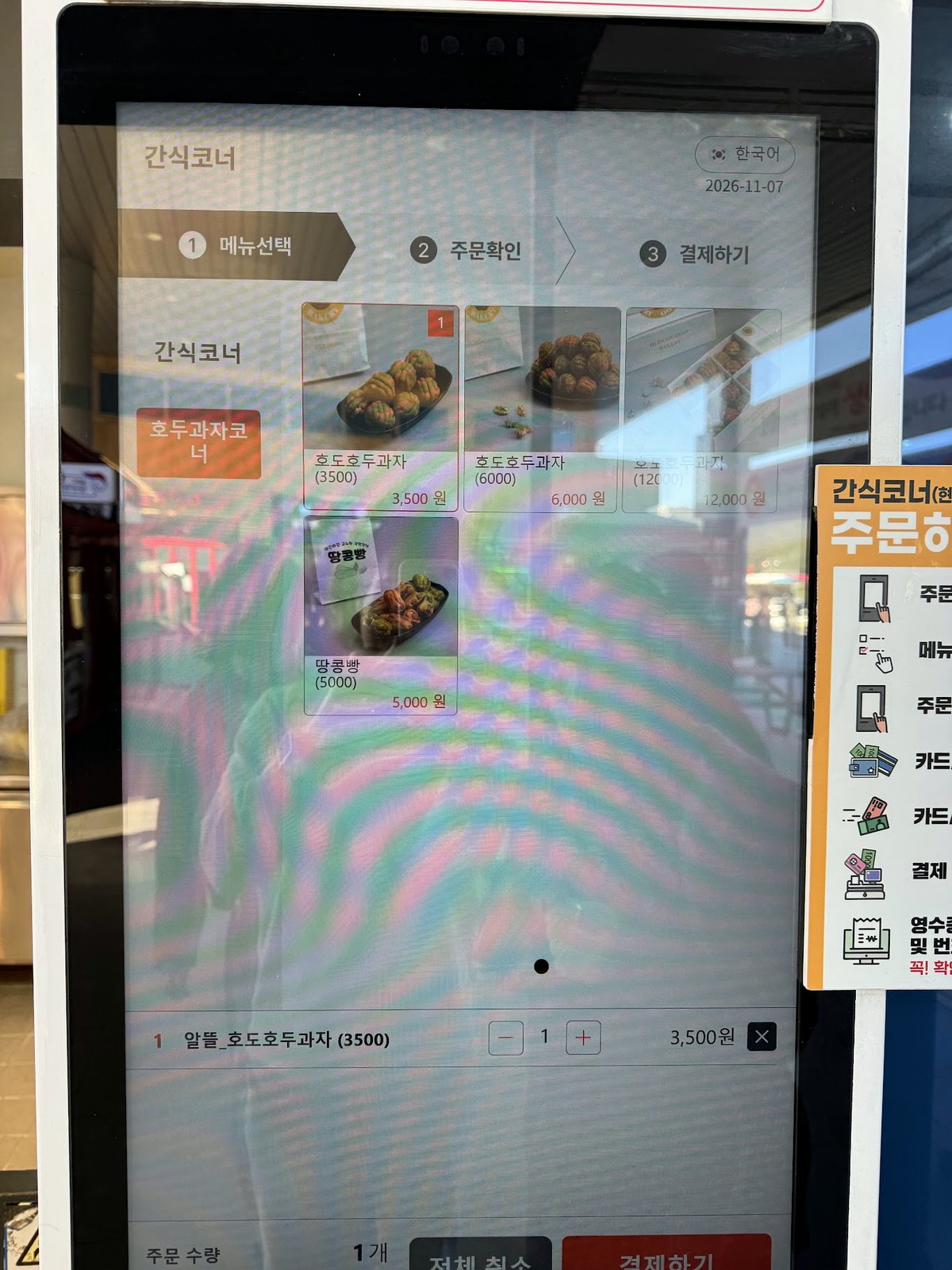
The kiosk menu, with the how-to sticker on the right. At the top of the
screen: 1. choose, 2. confirm, 3. pay. Photo: Jin from Korea
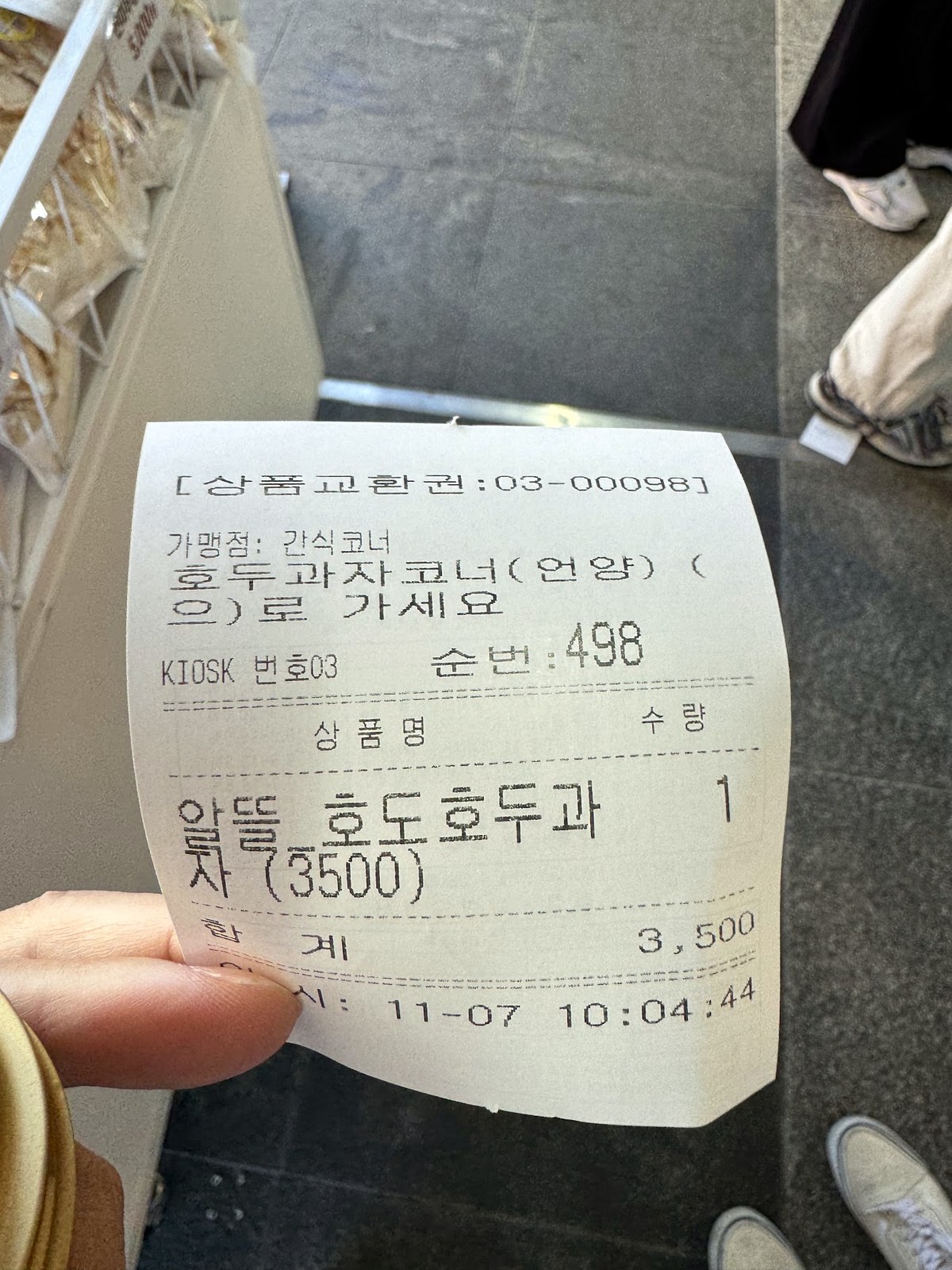
My ticket, which is also the exchange voucher: number 498, one small
bag, ₩3,500. Photo: Jin from Korea
After you pay, the kiosk prints a ticket. Mine said
호두과자코너(언양)(으)로 가세요, which means “please go to
the hodugwaja corner,” along with my order number. That ticket is also a
상품교환권, a product exchange voucher — don’t throw it away.
You have to present it at the stall to collect your food.
Sometimes the staff call out the number when an order is ready, but they say
it in Korean, quickly, over the noise. If you can’t catch it, don’t worry.
Just walk to the stall that makes the food you ordered and show them your
ticket. That is all they need.
Walnuts, red bean and a dry throat
I took my bag to one of the picnic tables out front. Most of the snacks here
are made to eat on the go, in the car or at these outdoor tables.
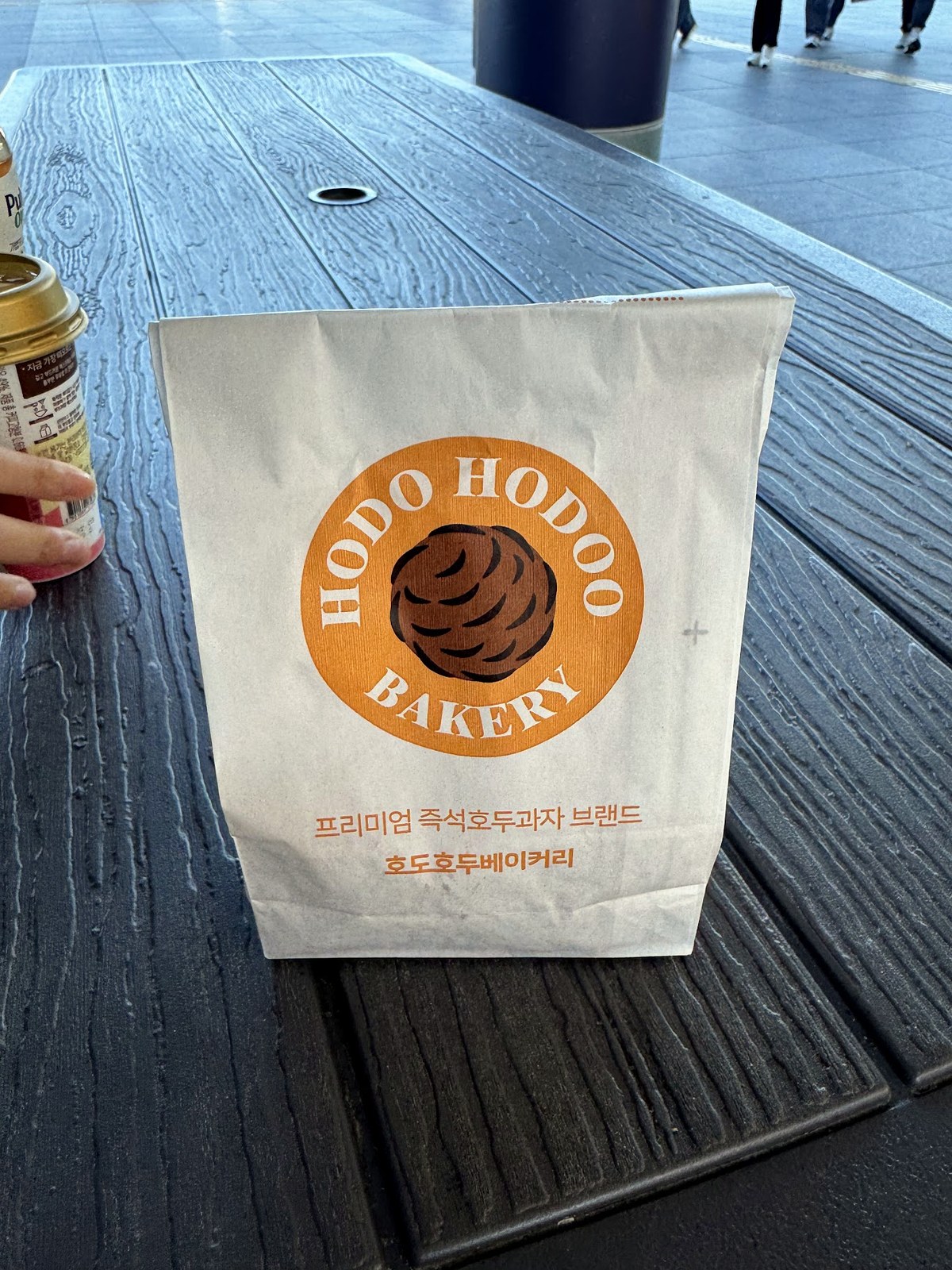
My small bag of hodugwaja on a picnic table outside. Photo: Jin from
Korea
Hodugwaja is shaped like a walnut, but it is not just for show. Inside each
one there is a real piece of walnut and a sweet red bean filling
(팥, pat). The outside is soft and bread-like, a little like
a small, dense pancake. The walnut gives the sweet bean a little nutty crunch.
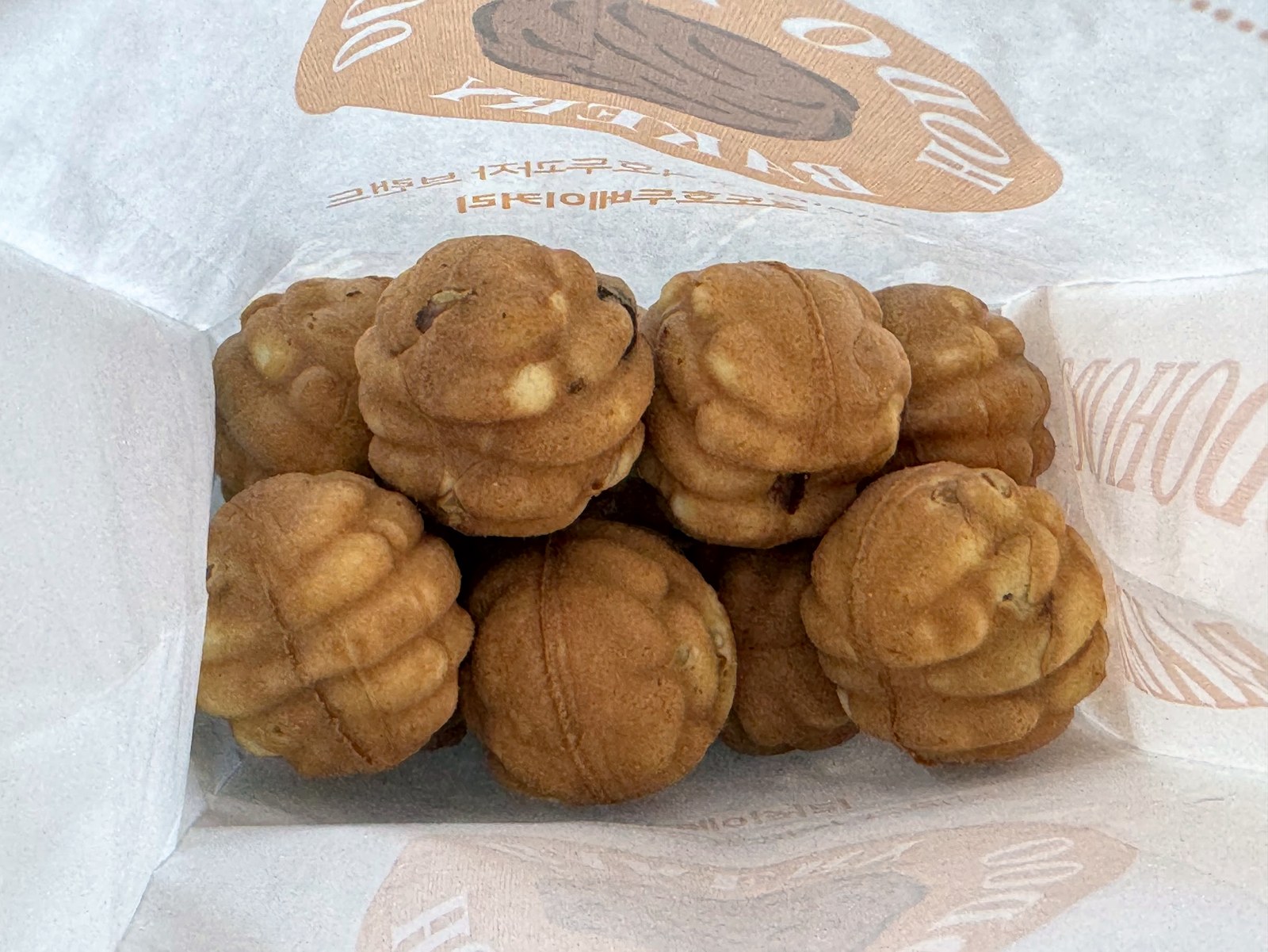
Fresh hodugwaja inside the bag. Photo: Jin from Korea
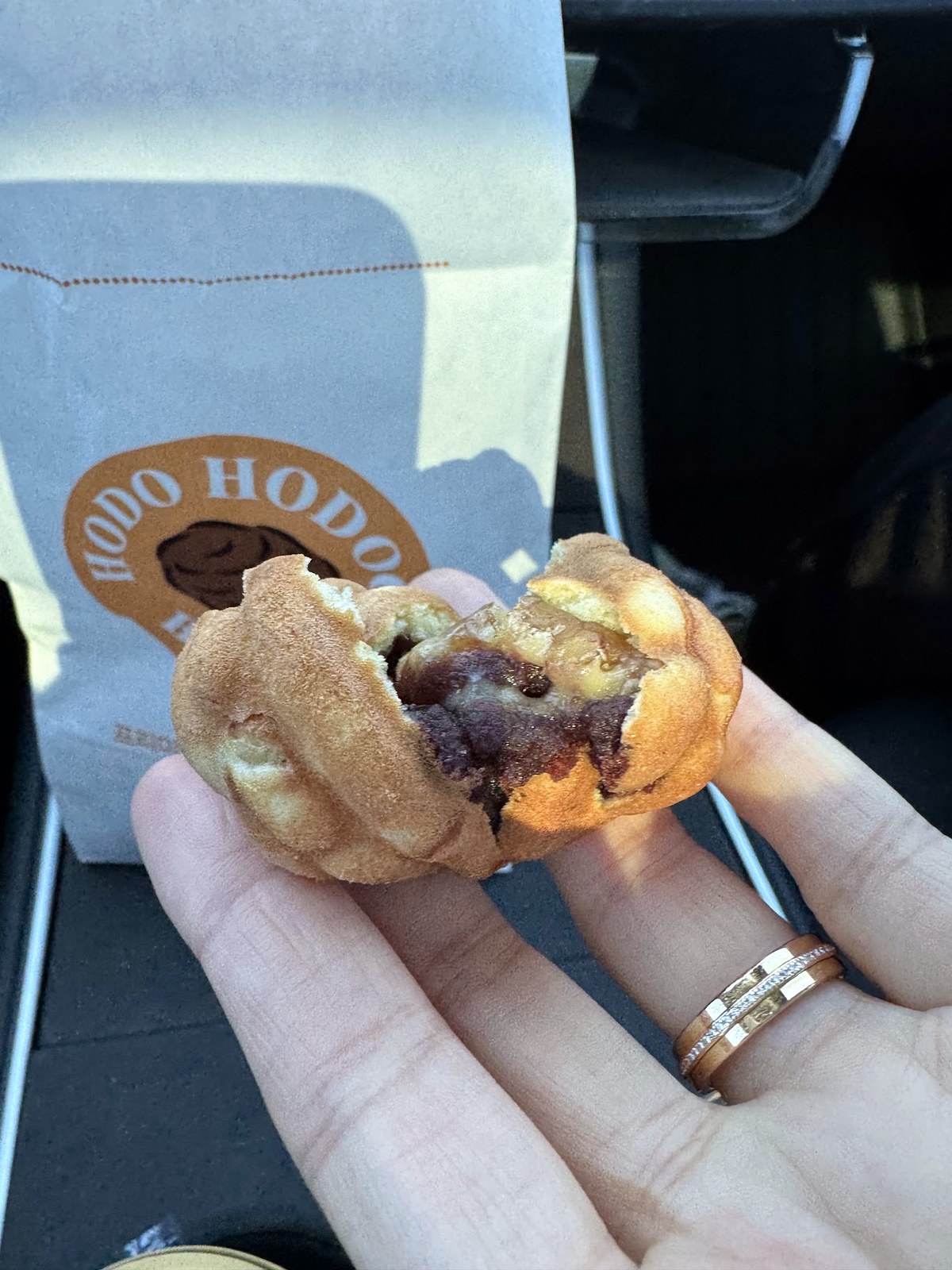
One bite in: red bean filling and a piece of real walnut. Photo: Jin from
Korea
My one complaint is the same one I have with bread. After a few, it starts to
feel a bit dry, like it is sticking in my throat. So before getting back on
the road, I went into the convenience store inside the rest area and bought a
drink to go with it.
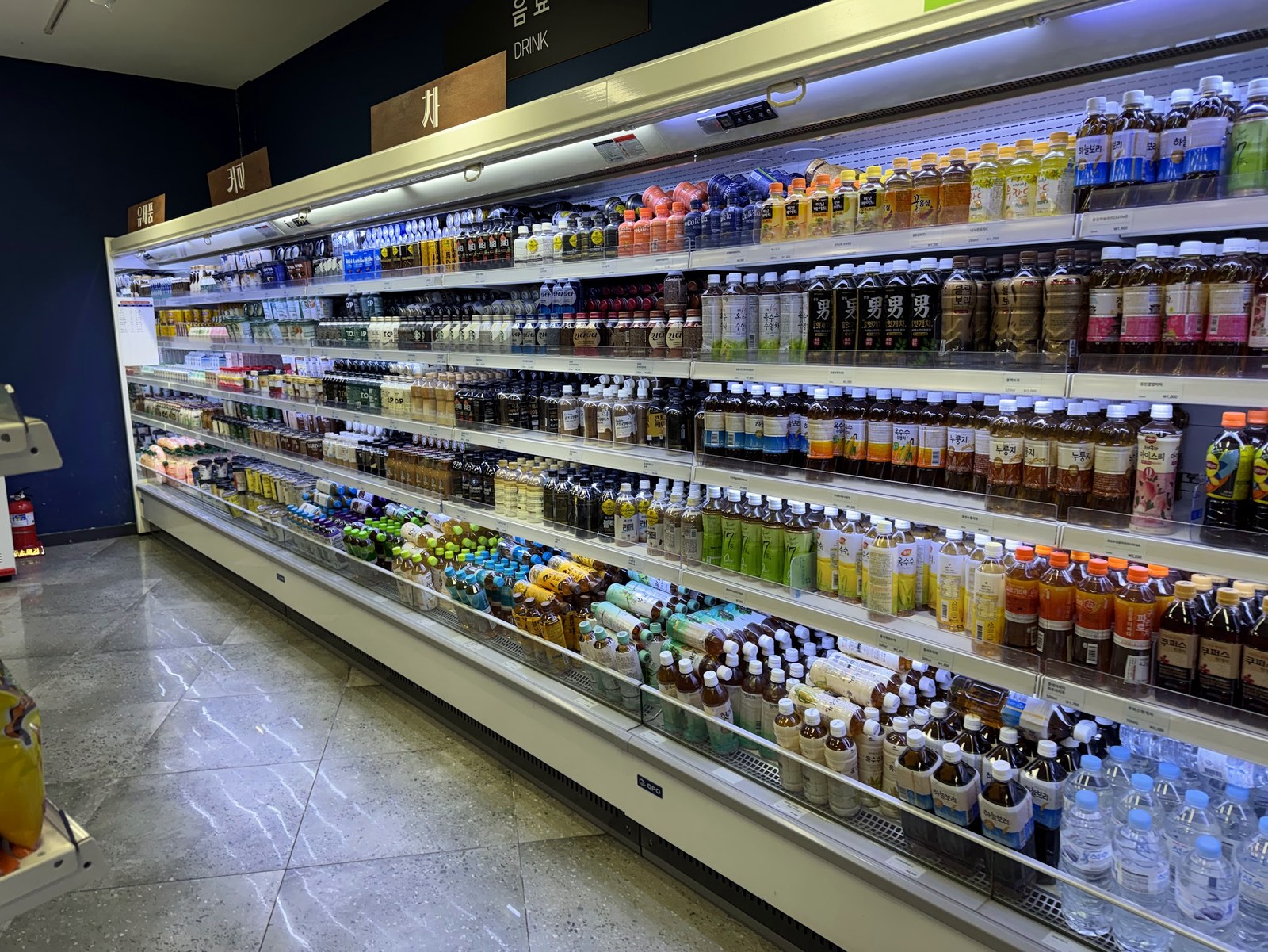
The drink fridges at the convenience store inside the rest stop. Photo:
Jin from Korea
If you want a suggestion, banana milk is a great match. Its sweet, creamy
taste goes well with the red bean and makes the cakes much easier to swallow.
Banana milk is a Korean convenience-store classic, and I wrote more about it
in my
Korean convenience store guide.
Worth the stop
A rest stop break doesn’t need to be long. Park, use the restroom, tap through
the kiosk, pick up a warm bag of hodugwaja and grab a drink, and you are back
on the road. If you rent a car in Korea, give yourself a few minutes to wander
past the snack stalls. If your express bus pulls in for a break, check the
departure time first, then do the same — just leave enough time to pick up
your order and get back on board. The hot bars and sotteok-sotteok are fun
too, but a small bag of walnut cakes still feels like the taste of a Korean
road trip to me.
Leave a Reply