Ask Koreans what to eat on a Friday night and many will say one word: chikin (치킨). The neighborhood chicken shop (치킨집, chikin-jip) is everywhere. The old-school chicken shops I grew up with served chicken on foil-lined plates, with cabbage salad and cold pickled radish. I’d start with half fried, half yangnyeom if you’re sharing.

A typical old-school chicken shop (치킨집). Photo: Jin from Korea
Order fried chicken (후라이드) if you want a crisp coating with a salt dip. Yangnyeom (양념) comes coated in a sweet, sticky red sauce. I like half-and-half (반반) for sharing because you get both in one order.
- Portion: han mari (한 마리) means an order of one chicken. It may come cut into pieces.
- Side dishes: Look for pickled radish. The old-school shop in these photos also served cabbage salad and a salt dip.
- Prices: Check the menu for the portion and whether half-and-half costs more than plain fried.
Why There Are So Many Chicken Shops in Korea
Walk through any Korean neighborhood and you will pass several chicken shops in a few minutes. In 2019, KB Financial Group’s research institute counted about 87,000 businesses licensed to sell fried chicken across the country. That number also includes hof (호프) beer pubs that serve chicken, so it is not only dedicated chicken shops, but it shows how much Korea loves chicken. The same report counted more than 400 chicken franchise brands, and on top of those come countless small family-run shops.
Chicken is a delivery favorite, a late-night snack and the classic match for beer; the pair is called chimaek (치맥), from chikin and maekju (맥주, beer).
A Short History of Old-School Korean Chicken
Korean fried chicken is younger than you might think. Whole chickens roasted in an electric oven became popular in Seoul in the 1960s. When mass-produced cooking oil arrived in the early 1970s, merchants started deep-frying whole chickens in oil. This is tongdak (통닭, “whole chicken”), and today people call that style yennal tongdak (옛날통닭), “old-days whole chicken”.
In 1977 a shop in the basement of a Seoul department store began frying chicken in pieces, and it is widely seen as Korea’s first chicken franchise. Then, in the early 1980s, came the big change: yangnyeom chicken, fried chicken tossed in a glossy red sauce. The Korea Herald and Yonhap News credit a chicken shop owner in Daegu, Yun Jong-gye, with creating it in 1980, using chili powder and starch syrup. Other early brands also helped make it famous, so the exact story depends on who you ask. Yonhap also reported that he came up with an early version of the pickled radish that is served with chicken today.
The neighborhood style in these photos has fried and yangnyeom on a short menu and chicken served on foil- or paper-lined plates.
What Arrives First: Cabbage Salad and Pickled Radish
At the old-school chicken shop in these photos, cabbage salad and pickled radish arrived before the chicken.
Cabbage salad with ketchup-mayo
The salad is made with finely shredded cabbage, sometimes with a few cucumber slices, topped with a pink dressing of ketchup and mayonnaise mixed together. Koreans call this dressing keyoneju (케요네즈), a blended word made from ketchup (케첩) and mayonnaise (마요네즈). For many Koreans this retro salad is a familiar sight at old-school chicken shops. Eat it while you wait.
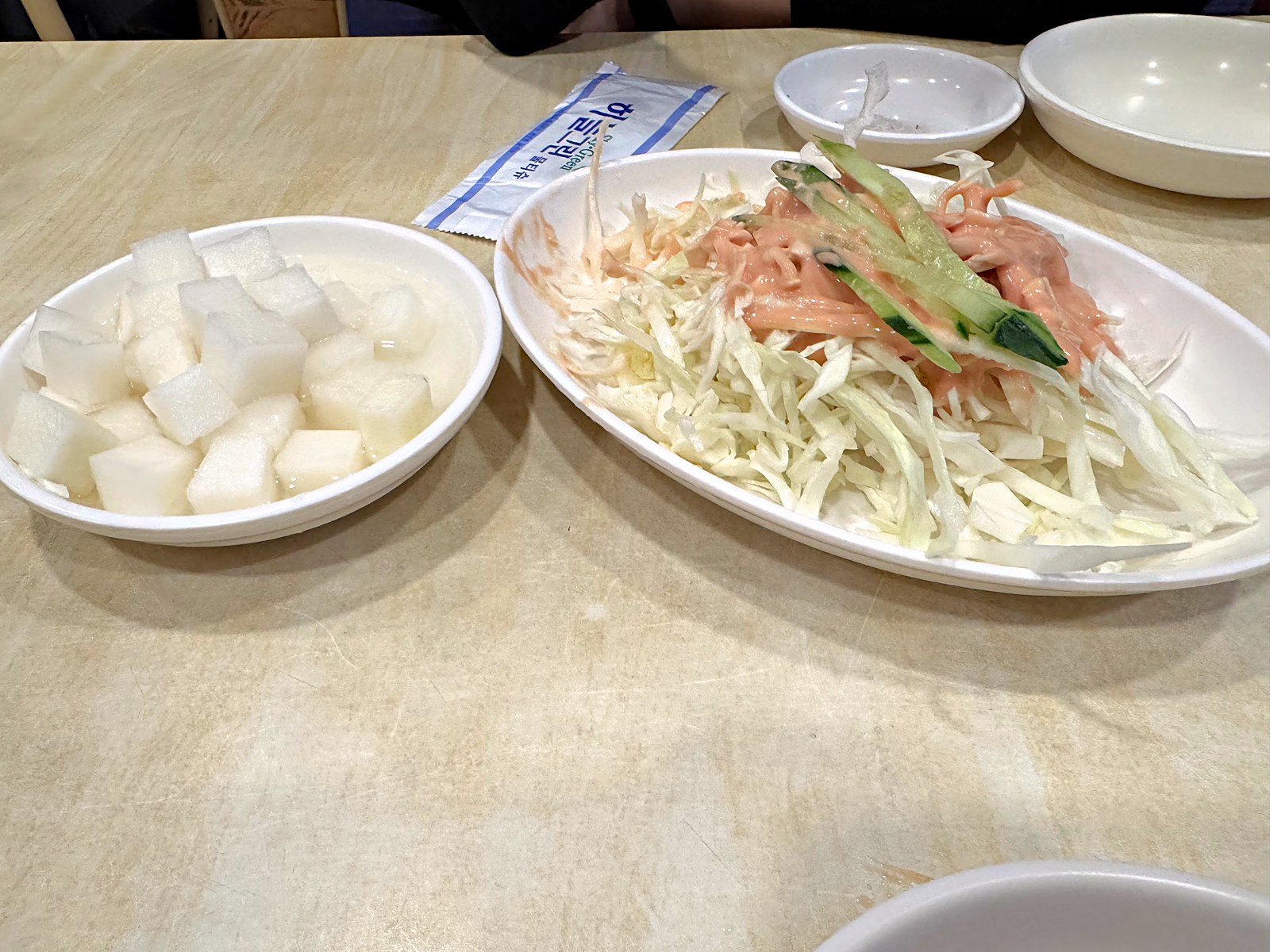
Pickled radish and ketchup-mayo cabbage salad from the shop in these photos. Photo: Jin from Korea
Pickled radish cubes (치킨무)
Chikin-mu (치킨무) is the bowl of cold, crunchy pickled radish cubes. Their sweet-sour taste cuts the richness of fried chicken between bites. If you finish the bowl, ask for more with the phrase below. My banchan guide explains how side-dish refills work.
Fried, Yangnyeom or Half-and-Half?
Here’s how the three menu choices differ.
Fried chicken (후라이드)
Huraideu (후라이드) is plain fried chicken. At the shop in these photos, it came in pieces with a thick, crunchy coating and a salt-and-pepper dip.
Looking for old-school whole fried chicken? Search for yennal tongdak (옛날통닭), the style where the bird is fried whole. On a chicken menu, han mari (한 마리) tells you the quantity. You can order one chicken and still get it in pieces, as in the photo below.
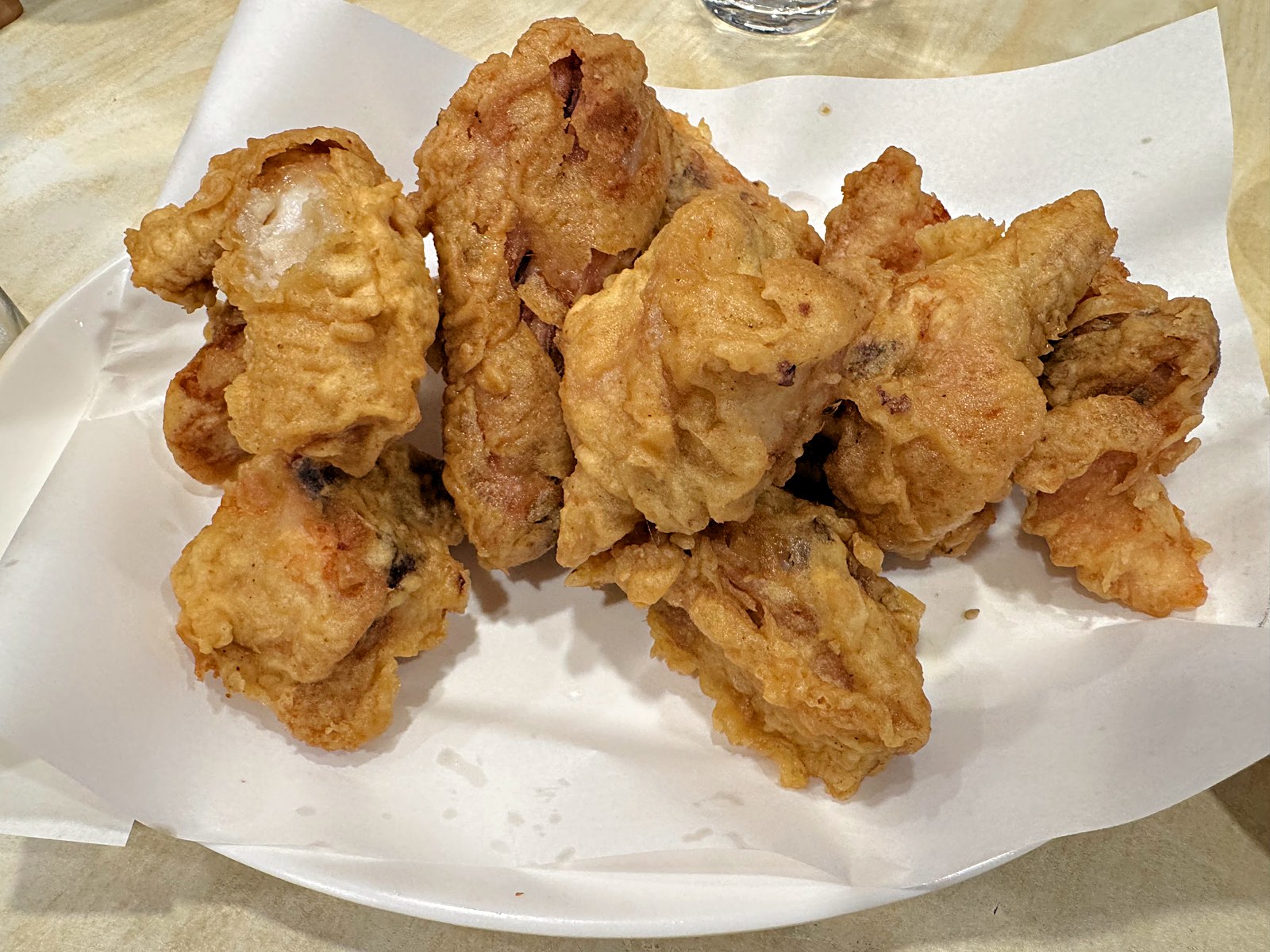
Plain fried chicken (후라이드). Photo: Jin from Korea
Yangnyeom chicken (양념)
Yangnyeom (양념) means “seasoning”. The fried chicken is coated in a sticky red sauce that is sweet first and only mildly spicy, usually finished with sesame seeds. It is messy and addictive. Spice levels vary by shop.
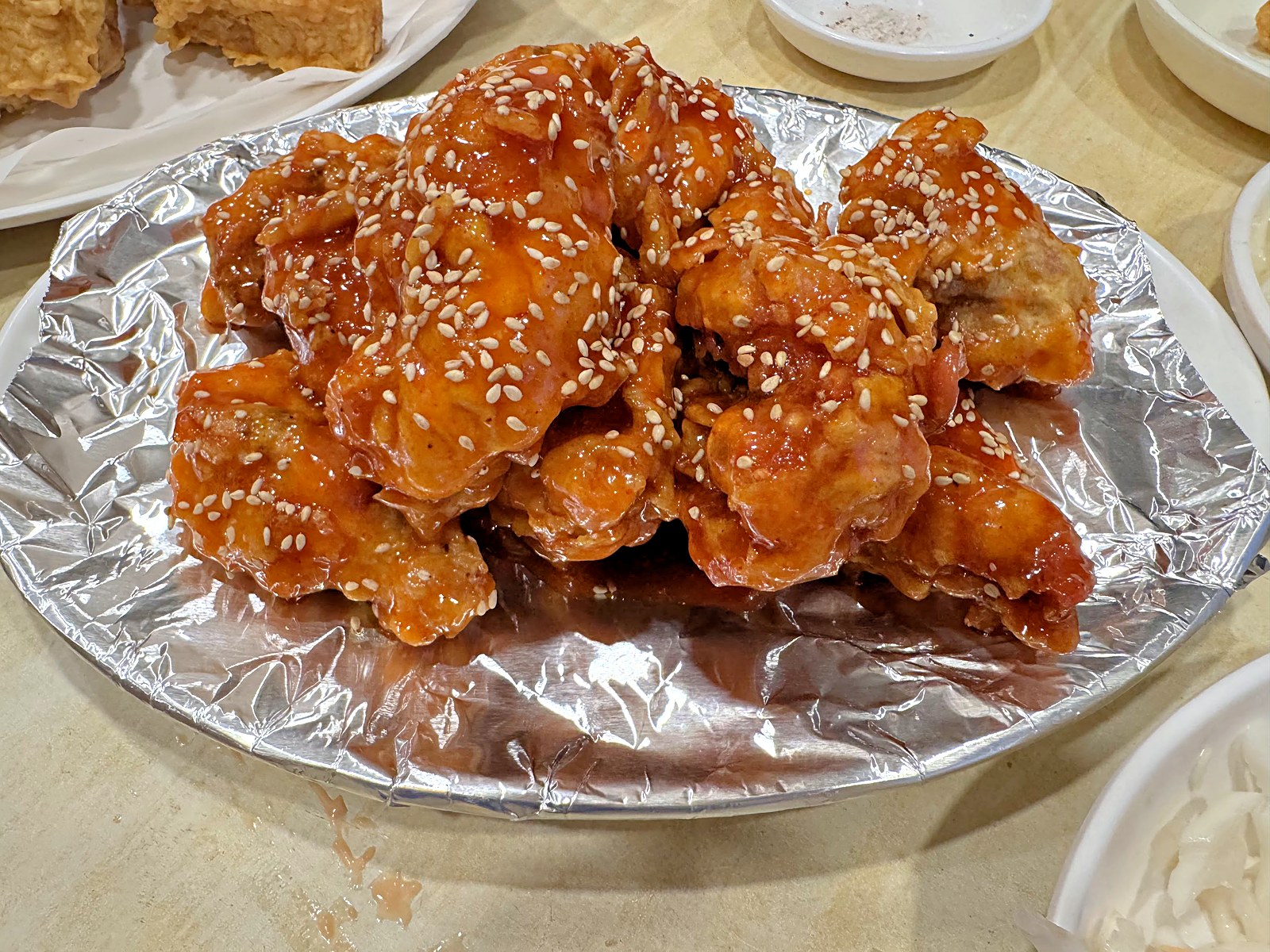
Yangnyeom chicken with sesame seeds. Photo: Jin from Korea
Half-and-half (반반)
Ask for banban (반반) to get half fried and half yangnyeom in one order. I’d choose it if you’re sharing and want to try both.
How Koreans Eat It: Salt Dip, Chopsticks and Wet Wipes
A little dish of salt and pepper
Plain fried chicken often comes with a small dish of salt mixed with pepper. Dip a piece lightly before each bite. You do not need it for yangnyeom.
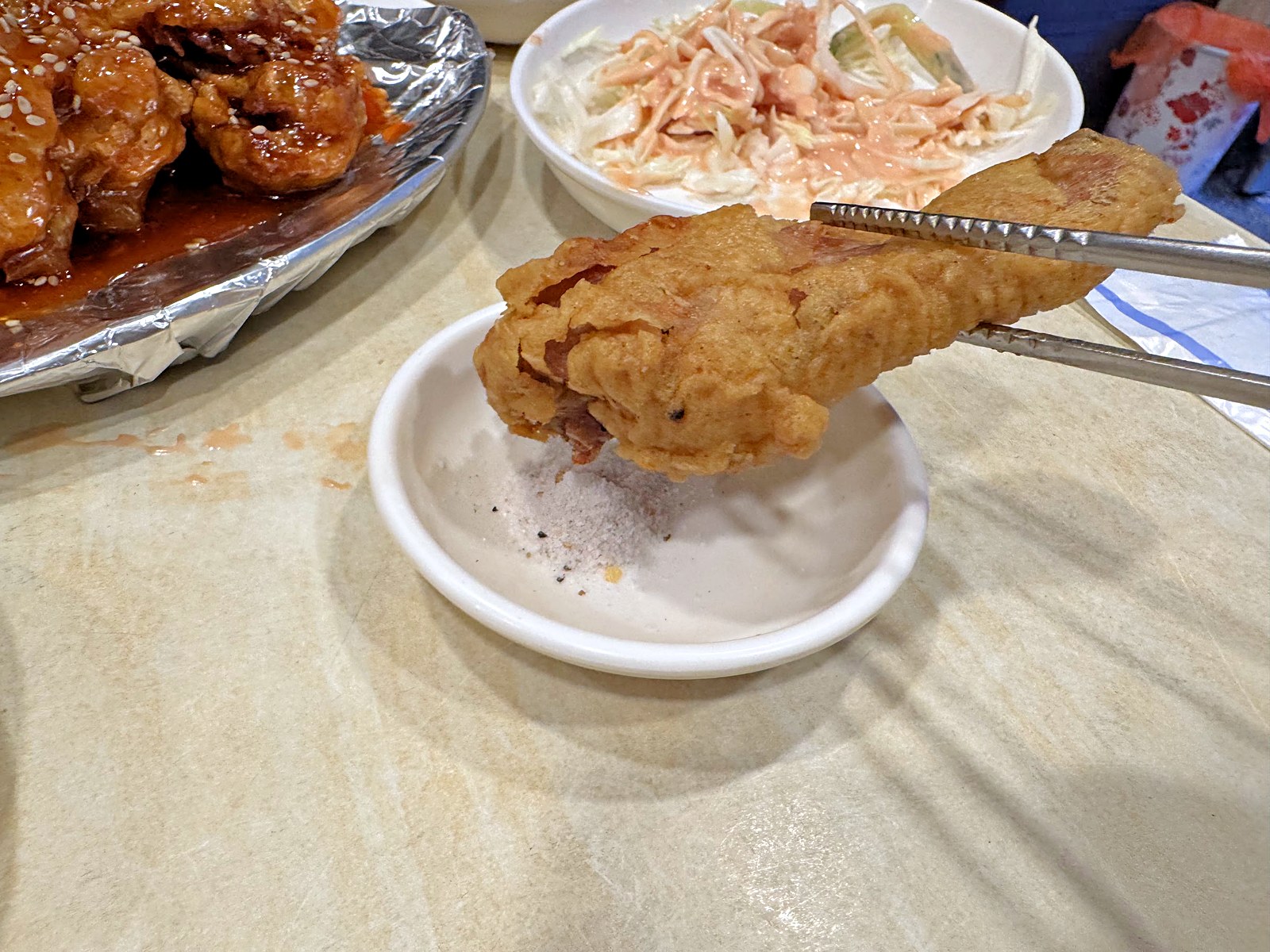
Dipping fried chicken in salt and pepper. Photo: Jin from Korea
Eating chicken with chopsticks
This surprises many visitors: Koreans often eat fried chicken with chopsticks (젓가락, jeotgarak). Metal chopsticks grip a drumstick well and keep your fingers clean, which matters with sticky yangnyeom. Using your hands is fine too.

Chopsticks work well, even for a drumstick. Photo: Jin from Korea
Wet wipes (물티슈)
At the shop in these photos, we got individually wrapped wet wipes, called multisyu (물티슈). They come in handy after eating sauced chicken with your hands. If you need one, ask 물티슈 좀 주세요. (Some wet wipes, please.)
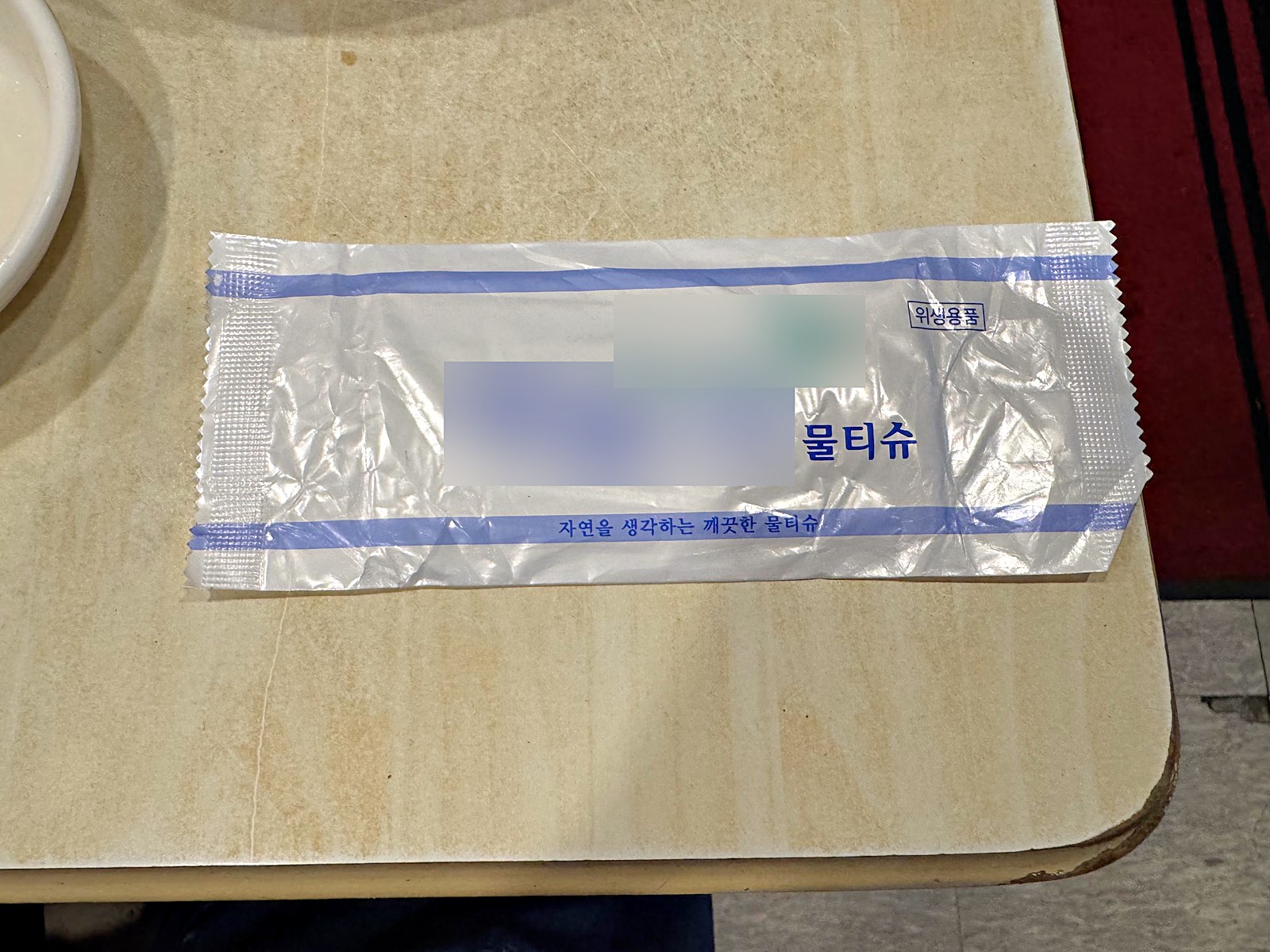
An individually wrapped wet wipe from our table. Photo: Jin from Korea
How to Order Korean Fried Chicken
At the shop
- Find a seat. At a small neighborhood shop, ask the staff where to sit if you’re unsure.
- Say what you want and how much. Say the type and the amount, for example “후라이드 한 마리” (one fried chicken) or “반반” (half-and-half). Point at the wall menu if you are unsure.
- Add drinks. Beer for chimaek, or a soda. Many shops have draft beer.
- Wait a little. Old-school shops often fry to order.
- Pay at the counter when you leave. Ask for leftovers to go with “포장해 주세요” (pojanghae juseyo).
Takeout and delivery
Delivery: Baemin (배달의민족) supports ordering in English, Japanese and Chinese. Baemin also says visitors can order as guests and pay with supported foreign-issued cards. Before placing the order, check your delivery address, contact number and available payment options. See Baemin’s English checkout guide for the steps.
Wi-Fi or mobile data works for ordering and tracking delivery. If you need internet away from your accommodation, see my eSIM vs SIM vs pocket WiFi guide.
Takeout: If app ordering doesn’t work for you, order at the counter and say 포장이요. (pojang-iyo, “For takeout, please.”)
Tips for Your First Chicken Night
- Share: one whole chicken is plenty for two light eaters.
- Bone-in or boneless: many shops also offer boneless chicken, sunsal (순살). Old-school shops are mostly bone-in.
- Go in the evening: chicken shops are busiest at dinner time and late at night, especially on match nights.
- Round two: after chicken and beer, many Koreans head to a noraebang (karaoke room).
- Late snack: if the chicken shops have closed, convenience stores have beer and quick snacks; see my convenience store guide.
Finding a neighborhood chicken shop
Tap a Naver Map search below to find a nearby chicken shop. If you’re new to Korean map apps, see my Google Maps vs Naver Map vs KakaoMap guide.
- 치킨 (chikin, fried chicken shops) — Find fried chicken near me
- 옛날통닭 (yennal tongdak, old-school whole chicken) — Find old-school whole fried chicken
Allow location access so Naver Map shows results around you.
Ordering chicken for here or to go
Show these on your phone or read them out. Staff at chicken shops are used to quick, short orders.
Words
- 후라이드 (huraideu) — fried chicken
- 양념 (yangnyeom) — sweet-spicy sauced chicken
- 반반 (banban) — half-and-half
- 한 마리 (han mari) — an order of one chicken
- 순살 (sunsal) — boneless
- 치킨무 (chikin-mu) — pickled radish
- 물티슈 (multisyu) — wet wipes
Phrases
- 후라이드 한 마리 주세요. (huraideu han mari juseyo.) — One fried chicken, please.
- 반반 주세요. (banban juseyo.) — Half-and-half, please.
- 양념 한 마리 주세요. (yangnyeom han mari juseyo.) — One yangnyeom chicken, please.
- 순살로 돼요? (sunsallo dwaeyo?) — Can I get it boneless?
- 포장해 주세요. (pojanghae juseyo.) — To go, please.
- 치킨무 더 주세요. (chikin-mu deo juseyo.) — More pickled radish, please.
- 물티슈 좀 주세요. (multisyu jom juseyo.) — Some wet wipes, please.
- 생맥주 하나 주세요. (saengmaekju hana juseyo.) — One draft beer, please.
- 계산해 주세요. (gyesanhae juseyo.) — The bill, please.
Plan More Korean Food Stops
An old-school chicken night is one of the most Korean things you can do on a trip: cabbage salad with ketchup-mayo, a bowl of chikin-mu, a plate of banban and a cold beer. For more food, try my bunsik guide and, in Busan, my Haeundae Market street food guide. For transport, money, apps and where to stay, start with my Korea trip planner for first-timers. Enjoy your chicken!
Leave a Reply